
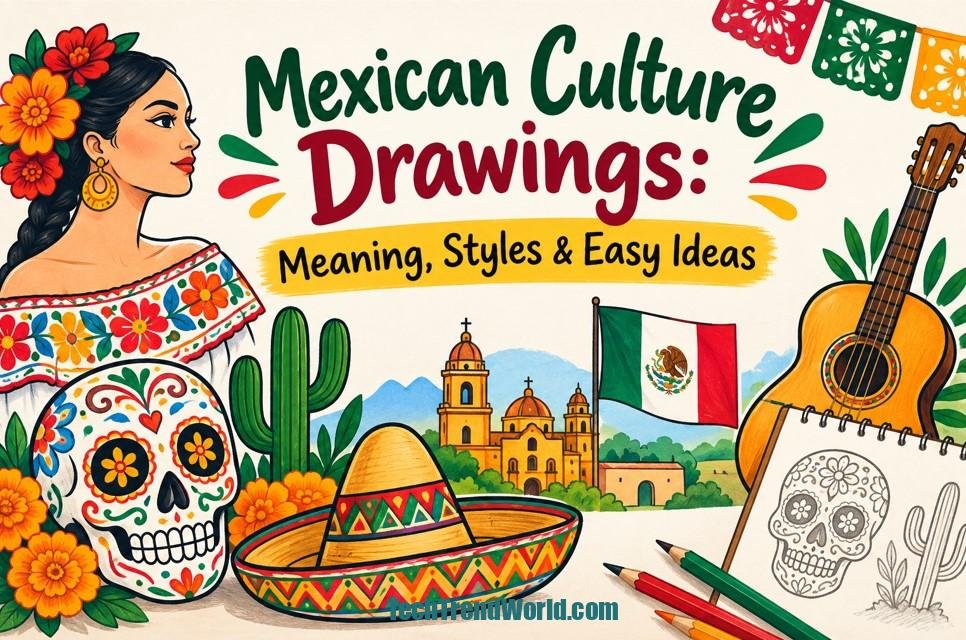
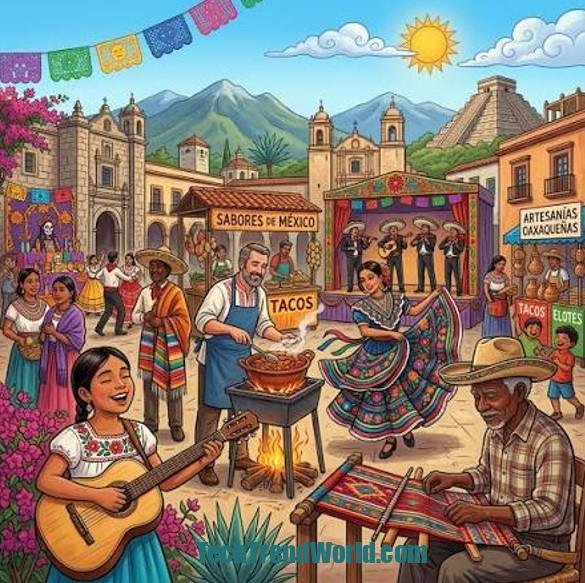
Mexican culture drawings tell stories that words alone cannot capture. Bright colors, bold lines, and deep symbolism come together to show the heart of a nation with thousands of years of artistic tradition.
Whether you’re a student working on a school project, an artist searching for inspiration, or simply someone curious about Mexican heritage, this guide will walk you through everything you need to know.
You’ll learn what makes these drawings unique, which symbols carry special meaning, and how you can create your own artwork inspired by this rich tradition. No prior art experience is needed — just curiosity and a willingness to learn.
1. What Are Mexican Culture Drawings?
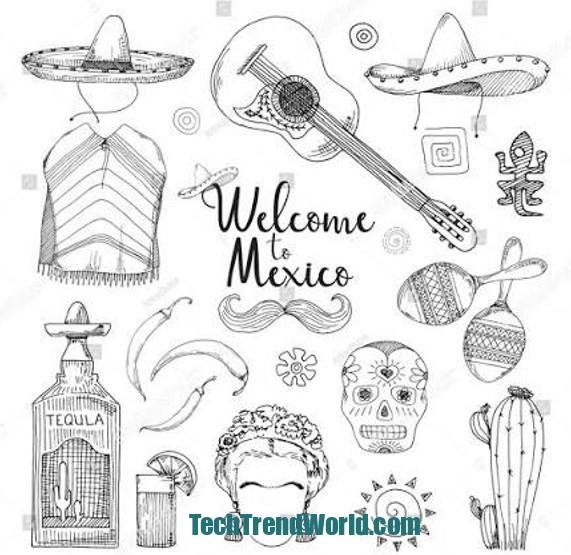
Mexican culture drawings are artworks that capture the traditions, beliefs, and daily life of Mexico. They often include religious imagery, folk symbols, historical figures, and nature-inspired designs.
These drawings aren’t just decoration. Each line and color choice usually connects to a deeper story. A skull might represent the celebration of life rather than death. A flower might symbolize a specific region or family tradition.
Artists use this style to honor ancestors, celebrate festivals, and preserve stories passed down through generations. This is why Mexican culture drawings feel so alive, even on a flat piece of paper.
2. A Brief History of Mexican Art
Mexican art has roots that stretch back over 3,000 years. Ancient civilizations like the Aztec, Maya, and Olmec created detailed carvings, murals, and pottery long before European contact.
After Spanish colonization in the 1500s, Mexican art blended indigenous techniques with European influences. This mixture created a unique visual language still visible today.
In the 20th century, artists like Frida Kahlo and Diego Rivera brought Mexican themes to a global audience. Their murals and paintings celebrated indigenous identity, political struggle, and everyday Mexican life.
Modern Mexican culture drawings continue this tradition, blending old symbols with new techniques like digital illustration and street art.
3. Popular Themes in Mexican Culture Drawings
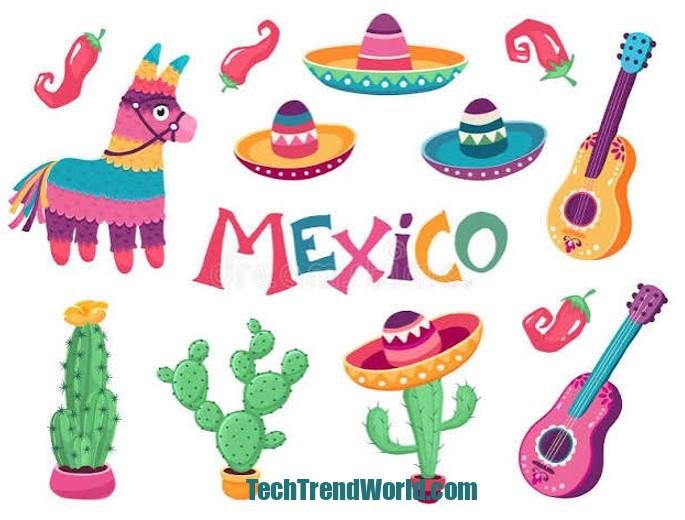
Several themes appear again and again in this art form. Understanding them helps you appreciate the deeper meaning behind each piece.
Day of the Dead (Día de los Muertos)
This is perhaps the most recognized theme worldwide. Artists draw decorated skulls, marigold flowers, and altars to honor deceased loved ones.
Aztec and Maya Mythology
Ancient gods, calendars, and pyramids often appear in drawings that connect modern art to pre-Columbian history.
Folk Art and Alebrijes
Alebrijes are colorful, imaginary creatures combining features from different animals. They originated in Mexico City and remain a favorite subject for illustrators.
Nature and Agriculture
Corn, cacti, and native flowers reflect Mexico’s deep connection to the land and farming traditions.
Religious and Spiritual Symbols
Images of the Virgin of Guadalupe and other religious figures show the strong influence of Catholicism blended with indigenous spirituality.
4. Common Symbols and Their Meanings
Understanding symbolism makes your artwork more meaningful. Here are some of the most common elements found in Mexican culture drawings:
- Sugar skulls (Calaveras): Represent the celebration of life and remembrance of the dead
- Marigold flowers (Cempasúchil): Guide spirits back to the world of the living during Día de los Muertos
- Eagle and serpent: Found on the Mexican flag, symbolizing the founding of Mexico City
- Papel picado (cut paper banners): Represent the fragility of life
- Nopal cactus: A symbol of resilience and national identity
- Sun and moon: Reflect Aztec cosmology and the balance of life
- Huipil patterns: Traditional woven designs representing regional identity
Each symbol carries centuries of meaning, so using them thoughtfully shows respect for the culture they come from.
5. Styles of Mexican Culture Drawings
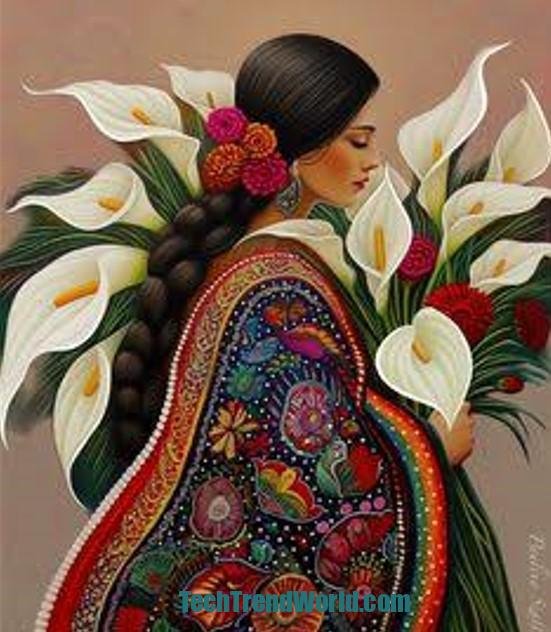
There isn’t just one way to draw Mexican culture art. Different styles serve different purposes and audiences.
Folk Art Style
Bold outlines, flat colors, and simple shapes define this traditional approach. It’s often seen in pottery, textiles, and murals.
Realistic Style
Some artists prefer detailed, lifelike portraits of cultural figures, festivals, or landscapes with careful shading and proportion.
Cartoon and Stylized Illustration
Popular in children’s books and animation, this style simplifies features while keeping cultural symbols recognizable.
Digital and Modern Art
Many contemporary artists now use tablets and software to create vibrant, shareable versions of traditional themes for social media and print.
6. How to Draw Mexican Culture Art: Step-by-Step Tips
You don’t need years of training to start creating your own Mexican culture drawings. Follow these beginner-friendly steps.
Step 1: Choose Your Subject
Pick one clear focus, such as a sugar skull, an alebrije, or a traditional dress pattern. Starting simple prevents overwhelm.
Step 2: Sketch Basic Shapes First
Break your subject into circles, triangles, and lines before adding detail. This keeps proportions accurate.
Step 3: Add Cultural Symbols Thoughtfully
Layer in flowers, patterns, or icons that connect to your subject’s meaning rather than adding decoration randomly.
Step 4: Use Bold, Contrasting Colors
Mexican art often features vibrant colors like magenta, turquoise, orange, and gold. Strong contrast makes designs pop.
Step 5: Outline with Confidence
Thick, clean outlines are a signature of this style. Use a fine liner or digital pen for crisp edges.
Step 6: Add Texture and Pattern
Small dots, stripes, or floral fills bring depth without complicating the overall design.
Step 7: Step Back and Review
Check your composition from a distance. Balance is just as important as detail.
7. Materials and Tools You’ll Need
You don’t need expensive supplies to begin. Here’s a simple starter list:
- Pencil and eraser for initial sketches
- Fine liner pens for clean outlines
- Colored pencils, markers, or watercolors for vibrant fills
- Sketchbook or heavy paper to prevent bleeding
- Digital tablet (optional) for those who prefer illustration software like Procreate or Adobe Fresco
Beginners often find that markers give the boldest, most authentic color results similar to traditional folk art.
8. Comparison Table: Traditional vs. Modern Styles
| Feature | Traditional Style | Modern/Digital Style |
| Tools Used | Paint, ink, textiles | Tablets, styluses, software |
| Color Approach | Natural pigments, bold flat colors | Unlimited digital color palettes |
| Common Subjects | Religious icons, folk symbols | Pop culture mashups, hybrid designs |
| Learning Curve | Requires manual skill and patience | Easier to edit and undo mistakes |
| Where It’s Used | Murals, pottery, textiles | Social media, merchandise, animation |
| Cultural Authenticity | Deeply rooted in tradition | Varies depending on artist intent |
9. Pros and Cons of Learning This Art Form
Pros:
- Builds cultural awareness and appreciation
- Improves color theory and composition skills
- Offers endless subject variety for creative growth
- Symbols are visually striking and beginner-friendly
- Useful for greeting cards, tattoos, home decor, and digital content
Cons:
- Requires research to avoid cultural misrepresentation
- Some symbols carry sacred meaning that shouldn’t be used casually
- Learning authentic techniques takes time and practice
- Overuse of stereotypes can feel disrespectful if not handled carefully
Approaching this art form with respect and curiosity leads to the most rewarding results.
10. Where to Find Inspiration
If you’re searching for ideas, consider these sources:
- Museums: The National Museum of Anthropology in Mexico City houses thousands of historical artifacts
- Local festivals: Día de los Muertos celebrations showcase living, breathing examples of this art
- Books: Look for collections on Frida Kahlo, Diego Rivera, and folk art traditions
- Online communities: Platforms like Pinterest and Instagram feature contemporary artists sharing their process
- Textiles and pottery: Studying traditional patterns can reveal color combinations you might not think of on your own
11. Common Mistakes to Avoid
Even experienced artists can fall into these traps:
- Mixing unrelated symbols without understanding their individual meaning
- Using only black and white when color is central to the style’s identity
- Copying directly from another artist instead of creating original interpretations
- Ignoring proportion when drawing traditional patterns like Huipil designs
- Ignoring cultural context, which can turn meaningful symbols into empty decoration
Taking time to research each element you include will always improve the final result.
12. Frequently Asked Questions
1. What is the most popular Mexican culture drawing theme?
Day of the Dead imagery, especially sugar skulls, remains the most recognized and widely drawn theme worldwide.
2. Do I need special training to draw in this style?
No. Basic drawing skills combined with research into symbolism are enough to get started as a beginner.
3. What colors are typically used in Mexican culture drawings?
Bright colors like magenta, turquoise, marigold orange, and gold are common, often paired with bold black outlines.
4. Is it disrespectful for non-Mexican artists to draw these themes?
It can be, if done carelessly. Approaching the subject with research and respect for meaning makes the artwork more appropriate and authentic.
5. What is an alebrije?
An alebrije is a brightly colored, imaginary creature made from combined animal features, originally created in Mexico City in the 1930s.
6. Can I use these designs for tattoos?
Yes, many people do, but it’s respectful to understand the symbol’s meaning before permanently placing it on your body.
7. What tools work best for beginners?
Fine liner pens paired with colored markers or watercolors offer the clearest, most vibrant results for new artists.
8. Are Mexican culture drawings only religious in nature?
No. Many designs focus on nature, mythology, agriculture, and everyday life rather than religious themes alone.
9. How can I make my drawings look more authentic?
Study traditional folk art patterns, use bold outlines, and research the specific meaning of any symbol before including it.
10. Where can I sell or share my finished artwork?
Platforms like Etsy, Instagram, and local art markets are popular places for artists to showcase and sell culturally inspired pieces.
Conclusion
Mexican culture drawings offer far more than beautiful visuals. They carry centuries of history, spirituality, and community pride within every line and color choice.
By learning the meaning behind common symbols and practicing basic techniques, anyone can begin creating artwork that honors this incredible tradition. Start small, research often, and let your curiosity guide your creative journey.
With patience and respect for the culture behind the art, your drawings can become a genuine tribute to one of the world’s most vibrant artistic traditions.