

There’s a particular kind of chaos that hits the moment a new puppy trots into your home. One minute you’re admiring those oversized paws and that puppy-breath smell, and the next you’re googling “why is my puppy eating the couch” at 2 a.m. If that sounds familiar, you’re exactly who this guide is for.
You’ve probably come across the name Puppywise while searching for free puppy samples, starter kits, or general new-puppy advice. It’s a real program, it’s genuinely useful, and there’s more to it than most quick round-up articles let on. In this guide, we’ll break down what Puppywise actually is, how to get the free starter kit if you’re eligible, what’s inside it, and — just as importantly — the practical, real-world puppy care knowledge that will actually make those first few months easier.
Let’s dig in.
What Is Puppywise?

<cite index=”3-1″>Puppywise is an online platform created by Mars Petcare, designed to support new puppy owners by addressing common early-stage challenges and connecting them with expert guidance.</cite> Rather than pushing a single product line, <cite index=”3-1″>the platform is built to stay brand-neutral while still representing the broader Mars Petcare family of pet brands.</cite>
In plainer terms: Puppywise exists because Mars Petcare — the company behind household names like Pedigree, Greenies, and Cesar — recognized that the first few weeks with a puppy are overwhelming, and new owners often don’t know where to turn for reliable, non-salesy advice. Puppywise positions itself as that starting point, combining educational resources with a physical welcome kit for eligible new puppy parents.
The Free Puppywise Puppy Pack
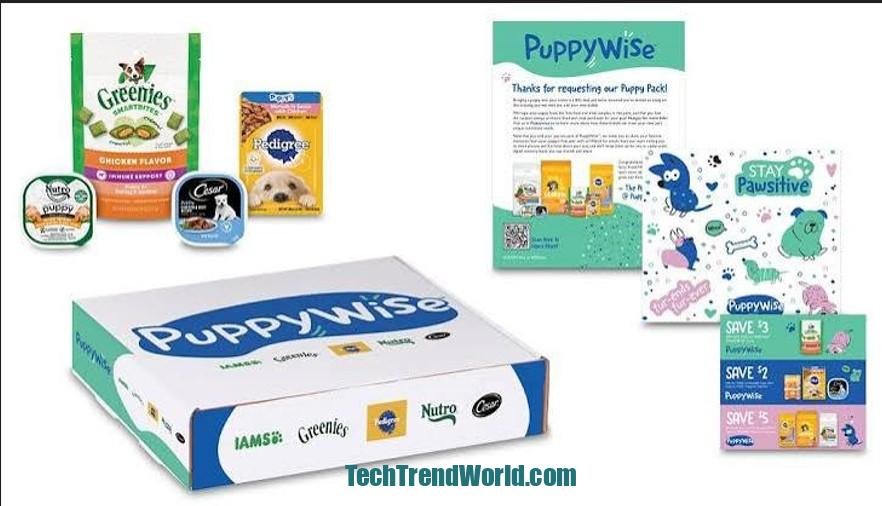
The most talked-about part of Puppywise is its free Puppy Welcome Kit (often just called the “Puppy Pack”). <cite index=”5-1″>It’s a curated bundle of puppy essentials meant to give a new puppy a strong start, typically including nutritious puppy food, treats, and exclusive deals for new owners.</cite>
Based on past kit rollouts, <cite index=”1-1″>boxes have included samples from Pedigree, Greenies, and Cesar, plus discount coupons worth around ten dollars off future purchases and some fun stickers thrown in.</cite> Naturally, the exact contents and value shift with each new promotional cycle, so treat any specific product list as a snapshot rather than a guarantee.
Who Can Actually Get One
A few important details tend to get glossed over in “free stuff” round-ups, so here they are plainly:
- Puppy-aged dog required. <cite index=”8-1″>You typically need a puppy-aged dog on file; without one, you may only qualify for a discount rather than the full free kit.</cite>
- Region restrictions apply. <cite index=”5-1″>Past offers have been limited to residents of the U.S., D.C., and Puerto Rico</cite> — so if you’re reading this from outside those areas, you may not currently be eligible, even though the brand’s educational content is still worth exploring.
- Limited supply. <cite index=”1-1″>Certain runs of the promotion have been capped, for example at the first 22,000 participants</cite>, meaning the offer can close early once demand hits that ceiling.
- No purchase necessary. <cite index=”2-1″>Signing up has generally required no credit card information</cite>, which is a good sign it’s a legitimate marketing sample program rather than a subscription trap — but always read the current terms before entering any personal details.
How to Sign Up
If a Puppy Pack promotion is currently live, the general process has looked like this:
- Visit the official Puppywise site and look for a “Get Your Puppy Pack” or similar call-to-action.
- Create a free account, providing basic details about yourself and your puppy.
- Check your inbox. <cite index=”5-1″>After signing up, you typically receive an email containing a unique promo code needed to complete the order.</cite>
- Redeem the code on the site to lock in your free kit before supplies run out.
A quick word of caution: offers like this rotate in and out of availability, and third-party “freebie” blogs sometimes list outdated links. Always confirm you’re on Mars Petcare’s official Puppywise domain before entering any information, and be skeptical of unofficial pages promising guaranteed free kits.
Why a Resource Like Puppywise Matters

It’s easy to dismiss a free sample box as a marketing gimmick — and sure, it is partly that. But there’s a real reason companies invest in first-time-owner education: the early weeks with a puppy shape lifelong habits, both for the dog and the human raising it. Getting nutrition, socialization, and basic training right from week one prevents a lot of headaches (and vet bills) down the road.
That said, Puppywise isn’t the only resource in this space. Platforms focused purely on ongoing wellness content, such as PupWise, offer <cite index=”4-1″>free, expert-vetted guidance on nutrition, behavior, weight management, and dental care without requiring a subscription</cite>. It’s worth bookmarking a couple of these resources rather than relying on a single source, since puppy care advice benefits from cross-checking.
Beyond the Free Kit: A Real-World Puppy Care Starter Guide
Free samples are a nice bonus, but they won’t teach your puppy not to chew your favorite shoes. Here’s the practical knowledge that actually moves the needle in those first few months.
1. Nutrition Basics
- Choose a food specifically formulated for puppies — their calorie, calcium, and protein needs differ significantly from adult dogs.
- Large-breed puppies need growth-controlled formulas to protect developing joints; feeding an adult-formula or overly rich diet too early can contribute to skeletal problems later.
- Stick to a consistent feeding schedule (usually 3 meals a day for young puppies, tapering to 2 by around six months).
- Introduce any new food gradually over 5–7 days to avoid stomach upset.
2. House Training That Actually Works
- Take your puppy out immediately after waking up, eating, and playing — these are the three biggest trigger points for accidents.
- Reward immediately after they go outside, not after you’re back inside. Timing is everything for a puppy’s brain to make the connection.
- Expect accidents. Punishment doesn’t speed up house training; it just teaches a puppy to hide when they need to go, which makes things worse.
- Crate training, done correctly, leverages a dog’s natural instinct not to soil their sleeping area — but the crate should always feel like a safe space, never a punishment.
3. Socialization Window
There’s a critical socialization period, roughly between 3 and 14 weeks of age, when puppies are most open to new experiences without developing fear responses later. During this window:
- Expose your puppy to a wide variety of people, sounds, surfaces, and (fully vaccinated, friendly) dogs.
- Keep early experiences positive and low-pressure — one bad encounter during this period can create long-term anxiety.
- Puppy socialization classes, once your vet clears you based on your puppy’s vaccination schedule, are one of the best investments you can make.
4. Basic Training Foundations
- Start with short (5-minute) training sessions multiple times a day — puppy attention spans are short.
- Focus on “sit,” “stay,” “come,” and loose-leash walking before anything fancier.
- Positive reinforcement (treats, praise, play) builds a far more reliable, confident dog than correction-based methods.
- Consistency between household members matters more than any single technique — if one person allows the puppy on the couch and another doesn’t, the puppy gets confused, not disciplined.
5. Health and Veterinary Care
- Puppies typically need a series of vaccinations between 6 and 16 weeks, spaced a few weeks apart.
- Schedule a vet visit within the first few days of bringing your puppy home, even if they seem perfectly healthy.
- Discuss spay/neuter timing with your vet — recommendations vary by breed size and have shifted in recent veterinary guidance.
- Puppy-proof your home: secure cords, remove toxic plants, and store medications and cleaning products well out of reach.
6. Managing the Chewing Phase
- Teething typically runs from around 3 to 6 months. Expect destruction.
- Keep a rotating stash of appropriate chew toys so your puppy always has something acceptable within reach.
- Redirect, don’t just scold — swap the shoe for a toy and praise the switch.
Puppywise vs. General Puppy Care Advice: Which Should You Trust?

It’s worth being clear-eyed here: Puppywise (and similar brand-run platforms) are genuinely useful for structured basics and free samples, but they’re still commercially motivated — the goal is ultimately to introduce you to Mars Petcare products. That doesn’t make the advice wrong; reputable veterinary brands generally have strong incentives to give accurate guidance. But for anything specific to your puppy’s breed, health history, or behavior concerns, your veterinarian remains the authority, not a marketing platform.
A good rule of thumb: use resources like Puppywise for general orientation and free trial products, and lean on your vet or a certified trainer for anything that affects your specific puppy’s wellbeing.
Final Thoughts
Bringing home a puppy is equal parts joy and jet lag. Programs like Puppywise exist to smooth out that first stretch — a free sample box won’t solve house training, but it takes one small logistical task off your plate during an already overwhelming time, while pointing you toward brands and resources that can support you long-term.
The real work of raising a well-adjusted dog comes down to the fundamentals: consistent nutrition, patient house training, deliberate socialization, and a vet you trust. Get those right, and everything else tends to fall into place.
Ready to get started? If you’re eligible, head to the official Puppywise site to check for a current Puppy Pack promotion, and pair it with a vet visit in your puppy’s first week home. Your future self — and your couch cushions — will thank you.
Frequently Asked Questions
1. What is Puppywise?
Puppywise is a puppy-care platform run by Mars Petcare that offers educational resources for new puppy owners along with a promotional free starter kit known as the Puppy Pack.
2. Is the Puppywise Puppy Pack really free?
Yes, when a promotion is active, the kit has historically been offered at no cost with no credit card required — though shipping availability and supply limits can affect access.
3. Who owns Puppywise?
Puppywise is a Mars Petcare initiative, the same company behind pet brands like Pedigree, Greenies, and Cesar.
4. What’s typically included in the Puppywise box?
Past kits have included sample-size pet food and treats, coupons for future purchases, and small extras like stickers. Contents vary by promotional cycle.
5. Is Puppywise available outside the United States?
Free kit promotions have generally been limited to the U.S. (including D.C. and Puerto Rico). Availability can change, so check the official site for current eligibility in your region.
6. Do I need to already own a puppy to sign up?
Yes — most versions of the offer require you to have a puppy-aged dog. Without one, you may only be eligible for a discount rather than a full free kit.
7. Is Puppywise a scam?
No, it’s a legitimate marketing and education program from an established pet care company. As always, only sign up through the official website and never pay to “unlock” a free offer.
8. How is Puppywise different from a puppy training app?
Puppywise focuses on introductory education and product sampling rather than structured, ongoing training programs. For hands-on training plans, a dedicated trainer or training app may serve you better.
9. What’s the best age to start puppy training?
You can start basic training the day you bring your puppy home. Formal obedience classes are usually recommended once your vet confirms your puppy’s vaccinations are sufficiently progressed, often around 10–14 weeks.
10. Should I rely only on brand platforms like Puppywise for puppy health advice?
No. Use platforms like Puppywise for general orientation and free samples, but always consult your veterinarian for anything specific to your puppy’s health, breed, or behavior.