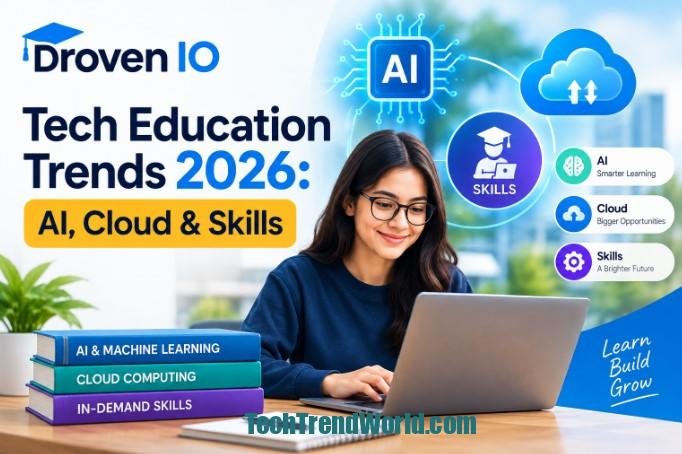
Tech education is moving faster than ever. New tools appear every month, and old ways of teaching struggle to keep pace. This shift has given rise to a phrase you may have seen online: Droven IO tech education trends.
This term is used across blogs and content platforms to describe a broader pattern — the move toward AI-driven, skill-first, and practical learning. It is not a single app or company. Instead, it works as a framework for understanding where tech education is headed.
For learners in India, this shift matters a lot. The country has one of the largest pools of tech talent in the world. Staying updated with these trends can mean the difference between landing a good job and falling behind.
This guide breaks down what these trends really mean, why they matter, and how you can use them to grow your skills in 2026.
What Does “Droven IO Tech Education Trends” Mean?
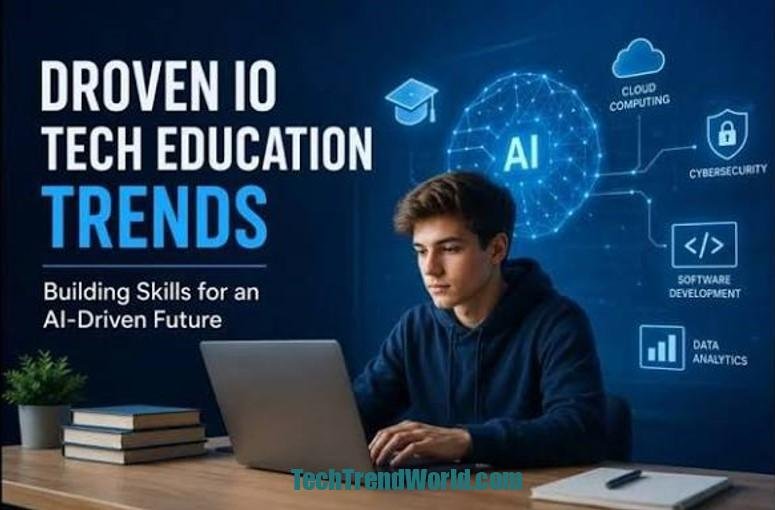
The phrase refers to a content-driven concept, not an official institution. It describes how modern platforms, bloggers, and educators are talking about the future of tech learning.
At its core, it points to three ideas:
- Simplification – breaking complex tech topics like AI and cloud computing into beginner-friendly lessons
- Practical application – learning by doing real projects instead of memorizing theory
- Continuous updates – content that changes as fast as the technology itself
Rather than a fixed curriculum, this is a way of thinking about education. It reflects how the internet, AI tools, and remote work have reshaped what “learning tech” actually means.
Why Tech Education Is Changing So Quickly

Three forces are driving this change together.
1. Artificial Intelligence Is Everywhere
AI tools now help people write code, debug errors, and explain difficult concepts instantly. This has lowered the entry barrier for beginners. But it has also raised the bar for what counts as a useful skill — anyone can generate code, so understanding why it works matters more than ever.
2. Employers Want Skills, Not Just Degrees
Many tech companies, especially startups and mid-size firms, now focus on what a candidate can actually build. A strong GitHub portfolio or a working project often carries more weight than a certificate alone.
3. The Internet Made Learning Instant
A student in a small town can now access the same AI courses, YouTube tutorials, and open-source projects as someone in a major tech hub. This has flattened access to knowledge, though it has also increased competition for jobs.
Top Tech Education Trends to Watch in 2026
AI-Powered Personalized Learning
Learning platforms increasingly use AI to adjust lessons based on a student’s pace and mistakes. Instead of one fixed course for everyone, the content adapts — skipping topics you already know and slowing down where you struggle.
This matters because no two learners think the same way. Personalized paths help reduce dropout rates in online courses, a problem that has affected e-learning platforms for years.
Cloud Computing Skills Are Now Essential
Almost every modern application runs on cloud infrastructure. Platforms like AWS, Microsoft Azure, and Google Cloud have become standard tools in software jobs, not optional extras.
Basic cloud literacy — understanding servers, storage, and deployment — is becoming as important as knowing a programming language.
Cybersecurity Awareness for Every Learner
Cybersecurity is no longer just for specialists. As more services move online, every developer, data analyst, and even marketer benefits from understanding basic security practices like data protection and safe coding habits.
Skills-Based Hiring Over Degrees
Recruiters increasingly test candidates through practical assignments, coding challenges, or portfolio reviews. A well-documented personal project can open doors that a degree alone might not.
Project-Based and Portfolio Learning
Completing a course is not the same as proving you can apply what you learned. Project-based learning asks students to build something real — a website, an app, or a data dashboard — and show the results.
This approach gives learners tangible proof of their abilities, which matters far more to employers than a certificate of completion.
Micro-Credentials and Short Certifications
Instead of multi-year degrees, many learners now pursue short, focused certifications in specific tools or skills — for example, a certification in a single AI framework or cloud service. These are faster to complete and directly tied to job requirements.
Remote and Hybrid Learning Models
Online bootcamps, virtual mentorship, and hybrid classroom models have become common. This flexibility allows working professionals to upskill without quitting their jobs.
Automation and No-Code Tools in Classrooms
No-code and low-code platforms let students build functional apps and automate tasks without deep programming knowledge. These tools are increasingly used in early tech education to teach logic and problem-solving before diving into full coding.
How These Trends Are Playing Out in India
India’s tech education landscape has its own unique dynamics.
- Tier 2 and Tier 3 city growth: Online platforms have made quality tech education accessible beyond major metros like Bengaluru, Hyderabad, and Pune.
- English and vernacular content: More platforms now offer tech courses in regional languages alongside English, widening access.
- Startup ecosystem demand: India’s growing startup sector often values practical skills and speed of execution over formal credentials, especially for early-stage hiring.
- Government-backed skilling programs: Initiatives promoting digital literacy and skill development continue to expand access to tech training for students and job seekers.
For Indian learners, this means competition is high, but so is opportunity — especially for those who focus on building visible, practical skills rather than collecting certificates alone.
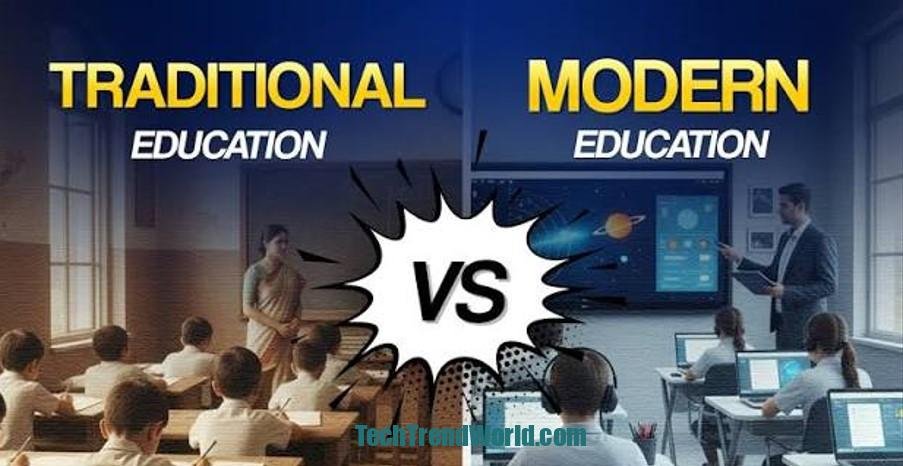
Traditional Learning vs. Modern Skill-Based Learning
| Aspect | Traditional Learning | Modern Skill-Based Learning |
| Focus | Theory and exams | Practical projects and portfolios |
| Pace | Fixed schedule for everyone | Self-paced, often AI-adjusted |
| Format | Classroom-based | Online, hybrid, or remote-first |
| Credentials | Degrees and diplomas | Micro-credentials and certifications |
| Assessment | Written exams | Project reviews, real-world tasks |
| Update Speed | Slow to revise curriculum | Frequently updated content |
| Cost | Often high (multi-year) | Often lower, shorter duration |
Both approaches have a place. A formal degree still matters for certain roles, especially in government jobs or core engineering fields. But for fast-moving areas like AI, web development, and data science, skill-based learning often adapts faster.
Pros and Cons of This New Learning Approach
Pros
- Faster skill acquisition — learners can pick up job-ready skills in months, not years
- Lower cost — many resources are free or low-cost compared to formal degrees
- Flexibility — study around work or personal commitments
- Real-world relevance — content updates quickly to match industry needs
- Wider access — geography matters less when learning happens online
Cons
- Requires self-discipline — without structure, many learners lose momentum
- Quality varies — not all online courses or content are equally reliable
- Less recognized in some sectors — certain employers and industries still prefer formal degrees
- Information overload — too many options can overwhelm beginners
- Limited peer interaction — remote learning can feel isolating compared to classrooms
How to Adapt: A Practical Action Plan
If you want to stay ahead of these trends, here is a simple path forward:
- Pick one core skill area — such as web development, data analysis, or AI tools — instead of trying to learn everything at once.
- Build a small project every month. Even a basic app or automated script proves your ability far better than a certificate.
- Use AI tools as assistants, not shortcuts. Learn to understand and improve the code or content AI generates for you.
- Get comfortable with at least one cloud platform. Free-tier accounts on AWS or Google Cloud are a good starting point.
- Share your work publicly — a GitHub profile, a portfolio website, or even a blog documenting your learning journey.
- Stay updated through reliable sources — official documentation, recognized tech publications, and structured courses rather than random social media tips.
Frequently Asked Questions
1. What exactly is Droven IO in tech education?
It is a content framework used to describe emerging trends in tech learning — AI-driven, skill-first, and practical education — rather than a single formal institution or product.
2. Is Droven IO a real company or platform?
It functions more as a conceptual term used across educational content to describe how modern tech learning is evolving, rather than a widely recognized standalone company.
3. Why is skill-based learning becoming more popular in India?
Because employers, especially startups, increasingly value practical ability over formal credentials, and skill-based courses are faster and often more affordable.
4. Do I still need a college degree for a tech career?
For many roles, especially core software and engineering positions, a degree still helps. But for niche or fast-changing fields like AI tools or web development, demonstrated skills often matter just as much.
5. What are micro-credentials?
Short, focused certifications that prove competence in a specific skill or tool, usually completed in weeks rather than years.
6. How can beginners start learning AI skills?
Start with free introductory courses on machine learning basics, then move to hands-on projects using accessible tools like Python libraries or no-code AI platforms.
7. Is cloud computing necessary for all developers?
Not mandatory for every role, but basic cloud knowledge is increasingly expected, since most modern applications are deployed on cloud infrastructure.
8. How do I build a strong tech portfolio?
Focus on 3–5 well-documented projects that solve real problems, and explain your process clearly rather than just showing the final result.
9. Are online tech certifications valued by employers in India?
Many are, especially from recognized providers, but they work best when paired with visible projects and practical skills.
10. What is the biggest mistake beginners make in tech learning?
Trying to learn too many tools at once instead of building depth in one area first. Focused learning beats scattered effort.
Conclusion
The idea behind Droven IO tech education trends captures something real: tech education is shifting from fixed, theory-heavy models toward flexible, skill-based, and AI-supported learning.
For learners in India, this shift opens real opportunities. Access to quality resources is no longer limited by location, and practical skills increasingly matter more than formal credentials alone.
The best approach is balanced. Use AI tools wisely, build real projects, and stay updated with reliable sources of information. Those who combine curiosity with consistent practice will be the ones best prepared for where tech education is headed next.